
Industrial Plug Performance And Safety Engineering By Nante
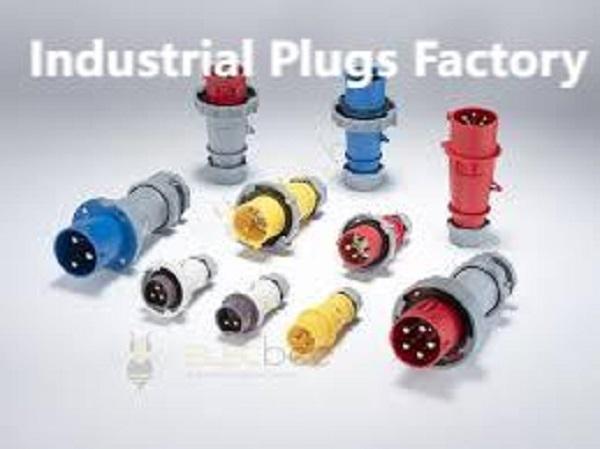
In modern industrial installations, choosing the right Industrial Plug often determines whether a system runs reliably under continuous load, and engineers know that selecting the correct Industrial Plug early avoids thermal surprises and premature wear. Proper selection balances electrical ratings, mechanical retention, ingress protection, and lifecycle servicing so that connectors remain dependable throughout heavy-duty duty cycles and environmental stressors.
Define the electrical profile first
Begin by fully documenting the circuit’s electrical demands: steady-state current, expected inrush (motor starts, capacitive charging), duty cycle, and ambient temperature range. Connector current and temperature ratings are only meaningful when matched to these real-world profiles. Use derating curves supplied by manufacturers to translate ambient conditions and enclosure thermal behavior into a required connector rating. Don’t forget harmonics and transient events: industrial drives and non-linear loads can increase heating beyond simple RMS calculations, so factor safety margins into contact sizing.
Mechanical coupling and vibration resistance
Mechanical retention style matters. Choose between threaded, bayonet, or push-pull couplings based on vibration exposure and frequency of mate/unmate cycles. Threaded couplers provide the greatest resistance to loosening under continuous vibration; bayonet designs can be faster to operate but may require additional locking features in mobile or high-vibration contexts. Evaluate the connector’s keying and alignment features to prevent mis-mating, and look for captive nuts, anti-rotation lugs, and robust strain-relief options that preserve terminal integrity over time.
Materials, plating, and contact longevity
Contact metallurgy and plating strongly influence long-term conductivity and resistance to corrosion. Copper alloys with proven spring performance are typical for high-current contacts; platings such as silver or gold reduce oxidation for lower-current or signal contacts. Insist on lifecycle data: manufacturers should provide contact resistance measurements after thousands of mating cycles and under accelerated corrosion tests if the environment is hostile. Also consider housing materials — impact-resistant polymers, aluminum, or stainless steel — chosen to match UV, chemical, and mechanical exposure.
Sealing, ingress protection, and environmental strategy
A connector’s IP or NEMA rating only matters as part of an assembled system. Specify compatible cable glands, gaskets, and sealing practices to maintain the claimed protection level once installed. Plan cable entries to include drip loops and protective collars, and choose gland materials resistant to chemicals and temperature swings found on site. For washdown or outdoor setups, select assemblies with proven IP66/67 performance and check for compatibility with power and signal cable sizes to avoid compression-induced leakage.
Installation discipline, terminations, and documentation
Most in-field failures trace back to poor termination. Use ferrules for stranded conductors, follow calibrated torque values for terminal screws, and implement strain relief clamps to prevent cable movement translating into terminal stress. Separate power and control wiring physically to ease troubleshooting and minimize EMI. Require installers to supply torque logs, termination photos, and as-built wiring diagrams at handover. These records accelerate diagnostics and reduce ambiguity during later maintenance.
Modular spares strategy and lifecycle planning (Nante solutions)
Standardize on connector families with interchangeable inserts and published compatibility matrices so spares are compact and effective across sites. Nante-style modularity that accepts removable inserts, prewired submodules, and common gaskets reduces SKU proliferation and lets technicians complete repairs during a single visit. Maintain a small, prioritized spare kit that contains the most likely failure items — common inserts, sealing gaskets, and gland sizes — and include recommended reorder points tied to field-replacement data.
Thermal management and condition monitoring
Plan for heat dissipation with conduction paths or mounting plates that move heat away from contacts. For continuous high-current applications, oversize conductors and contact areas to keep temperature rise within safe limits. Incorporate periodic infrared scans during commissioning and scheduled maintenance to find hotspots early. For mission-critical circuits, consider basic temperature sensors or scheduled contact-resistance checks that trigger replacement before catastrophic failure.
Standards, testing, and hazardous-area considerations
Verify compliance with IEC, UL, or regional standards relevant to your industry and location. For explosive atmospheres, ensure connectors have the appropriate explosion-proof or intrinsic-safety ratings and that the vendor supplies traceable test reports. Demand type-test evidence for claimed ratings, including mating cycle endurance, salt-spray, and thermal aging where relevant to your application.
Training, feedback loops, and continuous improvement
Close the loop between operations and procurement: capture failure modes, return reasons, and field-replacement intervals to refine specifications and spare-part kits. Provide technician training on proper termination, gland installation, and inspection checklists. A small investment in training and feedback mechanisms yields fewer emergency repairs and more predictable asset lifecycles.
Thoughtful connector selection and disciplined installation practice convert plugs from a recurring headache into robust, long-lived components of your power infrastructure. For data sheets, lifecycle testing, and application guidance, visit: https://www.nante.com/news/industry-news/what-is-industrial-plug.html

 Arabic
 French
 Spanish
 Portuguese
 Deutsch
 Turkish
 Dutch
Dutch
 Italiano
 Russian
 Romaian
 Portuguese (Brazil)
 Greek
Greek