
Nante Industrial Plug Socket Connector Reliability For Heavy Industries
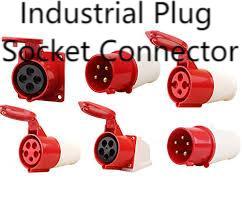
Choosing the right connector starts with understanding how a Industrial Plug Socket Connector behaves under continuous load, because real-world conditions — vibration, temperature swings, and frequent mating cycles — quickly expose weak designs; the right Industrial Plug Socket Connector balances electrical capacity with mechanical resilience to protect uptime and personnel safety.
Sizing for continuous load and electrical compatibility
Correctly sizing a connector requires more than matching peak amperage. Continuous currents create steady thermal stress that increases contact resistance if components are underspecified. Factor in duty cycle, harmonics from variable-speed drives, and any inrush currents caused by motors or capacitive loads. Specify contact metallurgy and plating to suit the application's conductivity and corrosion-resistance needs, and ensure the connector’s rated temperature rise is measured at expected operating currents rather than nominal ratings alone.
Mechanical durability and mounting practices
Mechanical design is as important as electrical rating. Reinforced mounting bosses and backing plates prevent deformation on thin panels, while strain-relief clamps protect terminations from cyclical bending. For harsh environments, choose recessed mating faces, tamper-resistant fasteners, and protective boots that shield contacts from impact and debris. Documented torque values and calibrated drivers for terminal screws reduce loose connections — a common root cause of overheating and arcing in heavy-use systems.
Materials, sealing, and environmental protection
Material choices determine longevity in corrosive, wet, or UV-exposed locations. High-performance thermoplastics provide corrosion resistance and lower weight, whereas metal-clad housings improve impact tolerance and thermal conduction. Specify appropriate sealing (O-rings, multi-lip gaskets, or compression lids) and verify ingress ratings under repeated access cycles. For washdown or coastal use, insist on stainless-steel hardware and corrosion-resistant contact platings to avoid premature degradation.
Nante Field Series: modular platforms for uptime
Modularity reduces mean time to repair. The Nante Field Series, designed with replaceable contact inserts and standardized gaskets, allows technicians to swap worn elements in the field without full harness replacement. Modular faceplates support mixed-power pinouts in a common footprint, simplifying spares and stocking. When evaluating suppliers, confirm spare-part lead times and interchangeability so repairs can proceed quickly during critical outages.
Safety, interlocks, and monitoring for prevention
Modern connectors can incorporate keyed housings, mechanical interlocks, and pilot contacts for presence verification. Keying prevents mismating between incompatible voltages; interlocks cut power when the plug is opened. Pilot contacts or contact-wear indicators enable condition-based maintenance by signaling when a connector requires service. These features reduce human error and enable integration with plant safety and monitoring systems.
Installation, commissioning, and verification protocols
A structured commissioning routine reduces early-life failures. Verify contact resistance and torque under load, perform dielectric and insulation-resistance checks, and document baseline measurements for future comparison. Color-coded or keyed markings simplify multi-socket deployments and prevent phase confusion. Train installers on conductor preparation and bending radii to avoid stress concentrations that lead to premature fatigue.
Maintenance planning and lifecycle economics
Preventive maintenance extends service life and lowers total cost of ownership. Schedule periodic inspections for discoloration, contact resistance trends, and seal condition. Replace consumables such as gaskets and wear inserts proactively, and maintain a small stock of critical modules to save repair time. Factor spare-part availability and predictable lead times into procurement to avoid extended downtimes from supply-chain delays.
Procurement checklist and supplier evaluation
Request full technical dossiers from suppliers: material declarations, IP/IK test reports, thermal-rise data, and batch traceability. Confirm compliance with relevant IEC, UL, or local standards for your region and ask for reproducible test evidence rather than generic claims. Prioritize vendors that offer installation support, clear maintenance documentation, and modular spare strategies to reduce operational risk.
Careful specification, proper installation, and disciplined maintenance turn connectors into reliable components rather than recurring failure points. For technical datasheets, certifications, and case studies on robust connector deployments, visit https://www.nante.com/news/industry-news/what-is-industrial-plug.html
 Dutch
Dutch
 English
 Arabic
 French
 Spanish
 Portuguese
 Deutsch
 Turkish
 Italiano
 Russian
 Romaian
 Portuguese (Brazil)
 Greek
Greek